

November 20, 2025

AFCI vs GFCI (What’s the Difference?)

Author

ONERYNO

Update First Last in Content -> Business Text -> First Last field

Date

November 20, 2025

Share

Safety has been a pillar of electricity since Benjamin Franklin conducted the historic Philadelphia kite experiment in the mid-1700s. Benjamin Franklin’s early experiments helped spark public interest in electrical safety. Today, those safety principles are addressed via modern electrical standards, such as the NEC. Electrical safety is regulated by the National Electrical Code (NEC), which requires Arc Fault Circuit Interrupters (AFCI) and Ground Fault Circuit Interrupters (GFCI) for residential circuits in specific areas of a home.

AFCI, GFCI, and Electrical Safety

When Clover Electric began doing business in 1985, GFCI technology had been in the NEC for less than 15 years. AFCI technology was developed in the 1990s, and it entered the NEC in 1999. Both technologies were developed to boost household electrical safety.

UC Berkeley Professor Charles Dalziel developed GFCI technology in the early 1960s. His work focused on detecting ground faults that lacked sufficient power to trip circuit breakers, but could be fatal to household members. Three decades later, the U.S. Consumer Product Safety Commission reviewed reports about house fires caused by arcing in the circuit wiring. The reviews prompted the development of AFCI technology to prevent electrical fires.

The combination of AFCI and GFCI technologies promotes comprehensive electrical safety in your Northeast Ohio home. GFCI devices (outlets) prevent shock hazards in living spaces where water is a risk factor. AFCI devices (circuit breakers) reduce the risk of fires caused by damaged insulation, faulty wiring, and loose connections.

GFCI Outlets

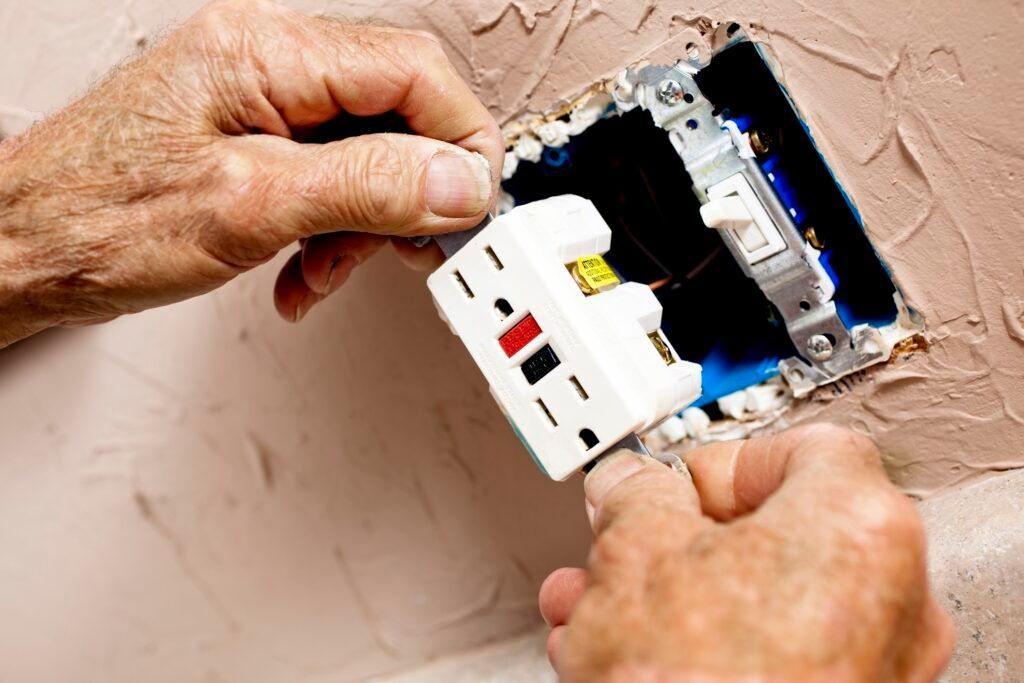
You’ve probably seen these outlets, which feature two buttons labeled TEST and RESET, inside basements, bathrooms, garages, and kitchens. In exterior living spaces like balconies, decks, and porches, GFCI outlets feature weatherproof covers. Water and moisture are the common denominators of these spaces because they significantly increase the risk of a dangerous ground fault.

GFCI outlets are covered by NEC Section 210.8, which identifies the areas of a home and accessory structures where they’re required. Generally, they must be installed anywhere you need to plug appliances or devices that are close to a water source. These outlets constantly monitor the electrical current flowing through the hot and neutral wires. The current output and return in residential circuits should be equal. When GFCI outlets detect a 5-milliampere imbalance, they cut off power to prevent electrical shock. In other words, GFCI outlets detect dangerous current leaks whereby water or people would be the grounding element absorbing a full discharge.

You can test GFCI outlets with lamps. After plugging the lamp in, turn it on and push the TEST button on the outlet. You’ll hear a click as the RESET button pops out and the lamp turns off. To restore GFCI protection, push the RESET button back in.

AFCI Outlets and Circuit Breakers

Electrical fire prevention is at the heart of AFCI technology. Like GFCI outlets, AFCI outlets monitor currents to detect arcing faults, whereby sparks jump across wiring gaps. The most common causes of arcing include frayed insulation, loose terminals, and electrical cords pinched behind furniture. Arcing may not be intense enough to trip the circuit breaker; nonetheless, the generated heat can ignite insulation, rafters, and other construction materials. AFCI outlets and circuit breakers work together to detect arcing patterns, cutting the power to eliminate the ignition source.

The first mandate of NEC section 210.12 required AFCI protection for outlets in bedrooms in the early 2000s. The Residential Code of Ohio adopted the mandate, updating it with subsequent editions to include major living spaces like dining rooms and living rooms. AFCI protection is a modern standard; many homes built before the early 2000s won’t have it unless the electrical system has been updated.

Bringing residential circuits up to code includes installing AFCI outlets and circuit breakers. When we get panel upgrade requests at Clover Electric, we know that AFCI protection is part of the job. For example, going from 100 amps to 200 amps triggers updated code requirements for the work being done, and this includes installing AFCI and GFCI protection in required locations.

The Bottom Line of AFCI and GFCI Protection

Beyond the compliance matter of AFCI and GFCI technologies being NEC mandates, they are vital for electrical safety. The bottom line is that you need both AFCI and GFCI protection at home to protect against electric shock and fires. At Clover Electric, we’ve completed many system upgrades featuring AFCI and GFCI outlets, particularly for historic homes in Lakewood and Cleveland Heights. You can combine outlet and panel upgrades with other services we offer, such as installing smart appliances and electric vehicle (EV) charging stations.

For all questions about AFCI, GFCI, and home circuit upgrades, contact Clover Electric today.

By ONERYNO May 29, 2026
If half the house lost power when your circuit breaker didn’t trip, the culprit could be several different factors. These include a partial electrical outage,

By ONERYNO May 4, 2026
Household electrical demands have continually increased over the years. However, many older homes were wired for a time when far fewer bathroom and kitchen appliances
By ONERYNO March 19, 2026
Electricity is inherently prone to erratic behavior. It can surge, sag, or be disrupted easily due to its sensitivity to environmental factors, mechanical failures, and
By ONERYNO December 24, 2025
Your electrical panel setup determines what you can plug in, the upgrades that are available, and how reliable your power is. Traditional breaker boxes often

By ONERYNO December 17, 2025
Short days, long nights, and cold snaps all push your electrical system harder in the winter. Space heaters run more often, lights stay on longer,

By ONERYNO December 15, 2025
Smart home technology is not just about cool gadgets. When you connect lighting, thermostats, and major systems to a single plan, you can make your

By ONERYNO November 25, 2025
Your home’s electrical work plays a crucial role in keeping your family both safe and comfortable. Taking the time to search for the best possible

By ONERYNO November 15, 2025
Electrical outlets function in the background of your home, but they handle a lot of power every day. Many of your everyday devices rely on

By ONERYNO November 5, 2025
Water and electricity do not mix, yet many homes have roof leaks, damp basements, or plumbing issues near electrical components at some point. When water